Bonjour lecteurs! Scandinavia is a region of contrasts. It’s a mix of capitales sophistiquées in between forests, islands and dramatic coastlines. Norway brings some of Europe’s most extraordinary mountain scenery, while Sweden offers vast woodland. As for the Baltics, it’s full of architecture and design. Whatever your love, lively urban districts, historic ports, distinctive food traditions or outdoors adventures, exploring Scandinavia is such une aventure! Here is your guide with the best spots not to miss.
Bergen Where Mountains Meet the Harbour
Bergen makes an atmospheric starting point for discovering Norway. The city sits between seven mountains and the sea. I dream to walk around the historic waterfront and observe the local fishing port.
Bryggen remains the most recognisable part of the harbour. Its colourful wooden buildings once belonged to merchants associated with the Hanseatic League. But nowadays, it’s a cool spot with galleries, workshops and small businesses.
The Fløibanen funicular climbs towards Mount Fløyen, where a broad panorama stretches across Bergen, its surrounding islands and the waterways beyond. Travellers interested in combining urban discoveries with spectacular scenery can find tours to Norway that bring together several sides of the country’s landscape.
The Drama of the Norwegian Fjords
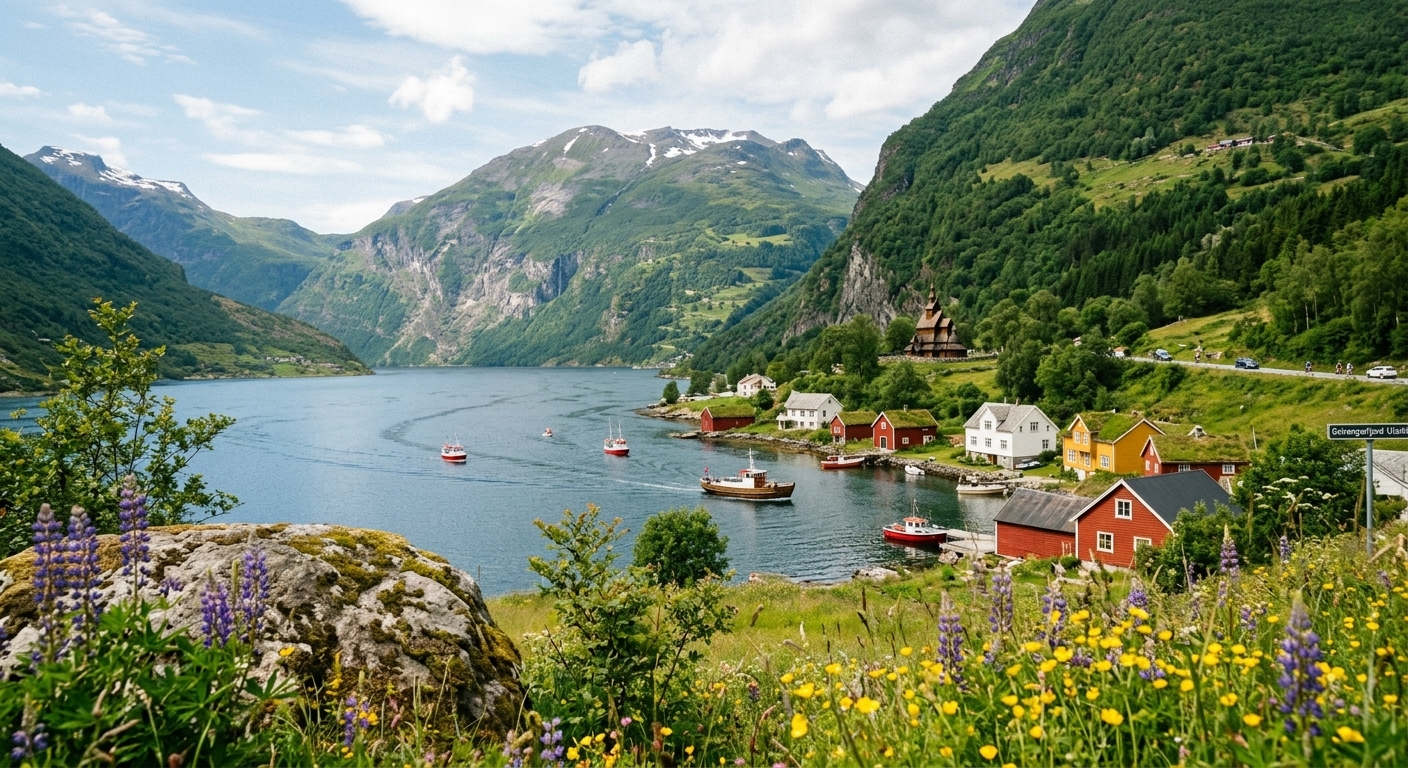
Explore further Norway and its famous fjords. The Sognefjord is particularly impressive for its sheer scale, extending deep into the country. The Geirangerfjord is smaller but très dramatique, with waterfalls descending from steep green slopes.
Travelling by boat allows the landscape to unfold gradually. Rather than seeing the mountains as isolated viewpoints, you can experience them where water, rock and settlement are closely intertwined.
Oslo’s Architectural Reinvention
Norway’s capital presents a striking change of scenery. Oslo stretches around the Oslofjord. But its identité is increasingly connected with contemporary architecture, museums and revitalised waterfront districts.
The Opera House is one of the city’s defining buildings. Its broad roof slopes towards the harbour and doubles as a public walkway. Such an unusual perspective over the surrounding area! The Munch Museum adds another architectural landmark nearby, while the National Museum brings together Norwegian and international works across a broad collection.
Despite its apparence moderne, Oslo remains closely connected to nature. Forested areas begin beyond the urban districts, and outdoor recreation is deeply embedded in local life. If you fancy seeing capitals, coastal scenery and Arctic landscapes within a single itinerary, tours to Scandinavia can provide a practical framework for experiencing several sides of the region.
Tromsø Beneath the Arctic Sky
Further north, Tromsø introduces the Arctic. The city lies above the Arctic Circle and is surrounded by mountains and waterways. It’s such an unusual dramatic setting for an urban centre of its size.
Winter changes the experience considerably. Daylight becomes limited, and the low sun can create an intense blue glow across the landscape. Snow-covered mountains frame the city while frozen surfaces and dark skies become part of daily life.
Tromsø is also associated with Northern Lights excursions. The aurora depends on solar activity and weather conditions, so sightings can never be guaranteed. Still, travelling away from artificial lights and waiting beneath a clear Arctic sky is une expérience unique.
Sweden’s Island Capital
Sweden brings a gentler landscape of forests, lakes and low-lying countryside. Stockholm provides the country’s architectural and cultural centre, spread across islands where Lake Mälaren meets the Baltic Sea.
The historic Gamla Stan is filled with narrow streets, colourful façades and old merchant buildings. The Royal Palace occupies a prominent position with museums and small squares are scattered throughout the surrounding lanes.
Stockholm’s newer districts feel considerably plus relaxé and contemporaire. Södermalm is known for independent shops, cafés, restaurants and creative businesses that brighten up the historic centre.
A Baltic Archipelago at the City Limits
The water surrounding Stockholm extends into an enormous archipelago of islands and rocky skerries. Some are permanent communities, while others contain little more than forest, cottages and a small jetty.
Ferries provide access to many of the larger islands, so that you can escape the urban environment without travelling particularly far. The change can be remarkable. Exit the apartment blocks and busy quays! You will be surrounded by pine trees, granite shores and open stretches of Baltic water.
Try to visit in the summer. The archipelago becomes an important part of Swedish outdoor life. Residents head out to swim, sail, fish and spend long afternoons beside the water.
The Flavours of the Far North
Food across Scandinavia reflects the region’s climate and agricultural history. Fish has long been fundamental to coastal communities, while berries, mushrooms, root vegetables and grains have played an important role further inland.
Norwegian menus often feature salmon, cod, crab and other seafood. Sweden has its own collection of familiar dishes, including meatballs, pickled herring and crispbread.
Contemporary Nordic restaurants have given these ingredients new forms, but traditional food remains easy to find. Markets, bakeries and neighbourhood cafés often provide a more relaxed introduction to local tastes than formal dining rooms.
The Swedish tradition of fika is particularly appealing to visitors. Coffee and something sweet become the reason to stop for a while, turning an ordinary break into an important part of the day.
When Snow Changes the Rhythm
Winter gives Scandinavia une personnalité différente. Forests become quieter beneath snow, lakes freeze and outdoor activities become part of everyday recreation.
Northern Norway and Sweden offer opportunities for cross-country skiing, snowshoeing and dog sledding, while mountain areas attract visitors looking for more adventurous winter sports. Bring suitable clothes and equipment to make the most of it.
The cities also change with the season. In the evenings, spent time in restaurants, museums and cafés and just enjoy a slower rythm.
The Spirit Between City & Wilderness
J’adore the Scandinavian way of life. Everthing is very much connected to the natural environment. Fjords and mountains dominate the Norwegian west, while Sweden’s forests and archipelago create a more expansive and understated setting.
A city break will give you a different perspective. Bergen preserves its maritime heritage, Oslo embraces contemporary culture, Tromsø faces the Arctic, and Stockholm combines historic streets with modern design. Which one will you choose?
Together, these destinations show a northern Europe that is constantly changing with the seasons. You are in for a treat with dramatic landscapes or elegant city centres. Plus, you can witness how the two coexist.
Collaboration